
Aerogel & PC Sheet for Battery Thermal Runaway Barriers
Cell-to-cell thermal barriers for propagation delay, dielectric isolation and pack safety
Values are typical reference ranges and may vary depending on material grade, thickness, compression level, cell chemistry, pack design, exposure duration and validation method.
When one cell enters thermal runaway, the engineering goal is to delay heat and flame transfer to neighboring cells, supporting detection, shutdown and emergency response time. Aerogel insulation and flame-retardant PC sheet are complementary barrier materials placed between cells and modules. This guide covers their properties, selection and placement.
Why Cell-to-Cell Barriers Matter
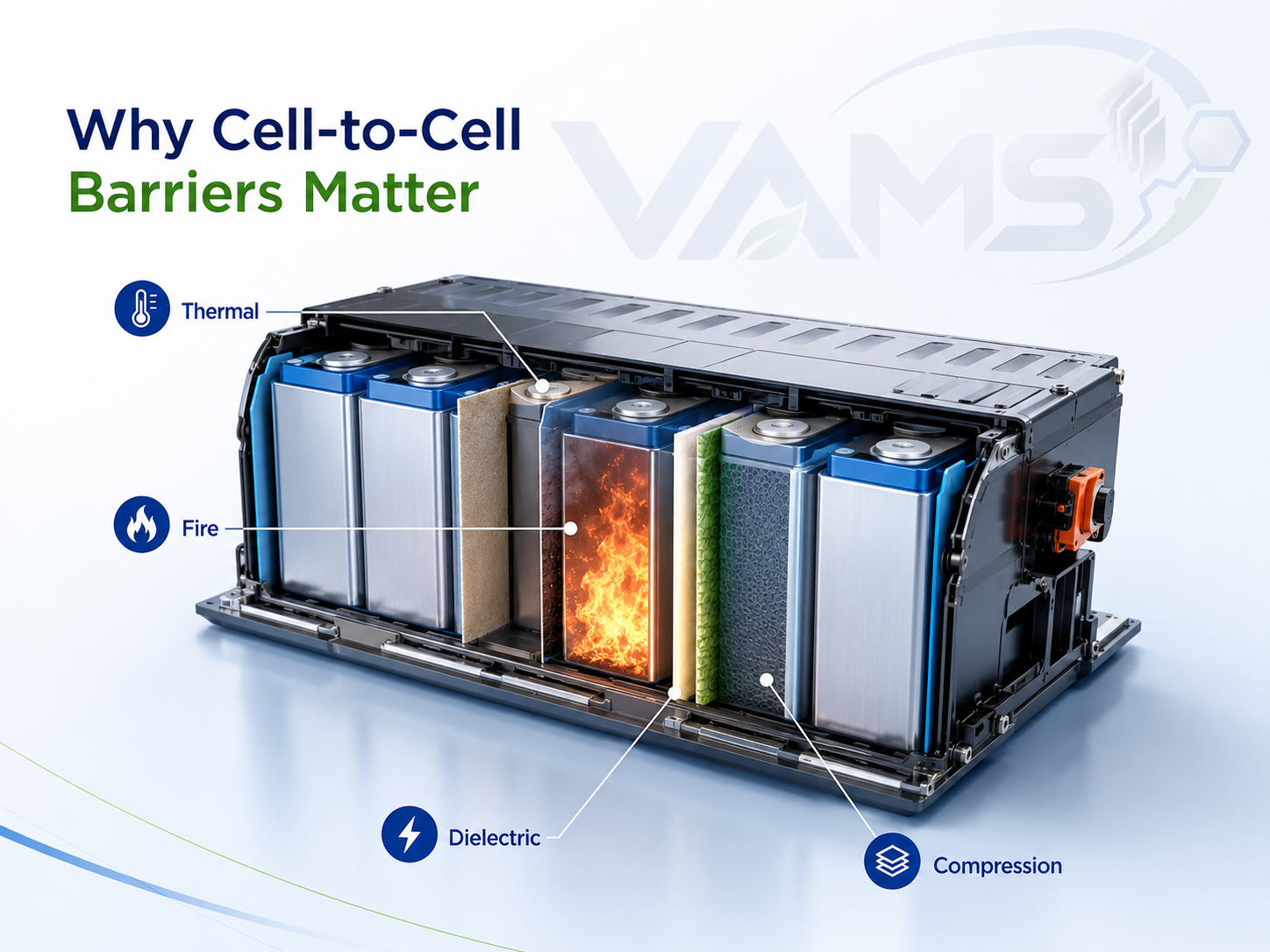
Cell-to-cell barriers must insulate heat, withstand flame and keep cells electrically isolated
Standards such as UL 9540A, GB 38031 and ECE R100 drive a “no-propagation” or delayed-propagation target. A barrier between cells must do three things at once: insulate against conductive/radiant heat, withstand the flame and hot gases of a venting cell, and maintain electrical isolation — all while taking minimal space and absorbing cell swelling.
- Thermal: ultra-low conductivity to slow heat transfer to the next cell
- Fire: help resist direct flame and 600–1000°C vent gas, depending on grade and test condition
- Dielectric: keep cells electrically isolated under compression
- Mechanical: absorb cell breathing/swelling and hold compression
Aerogel Insulation
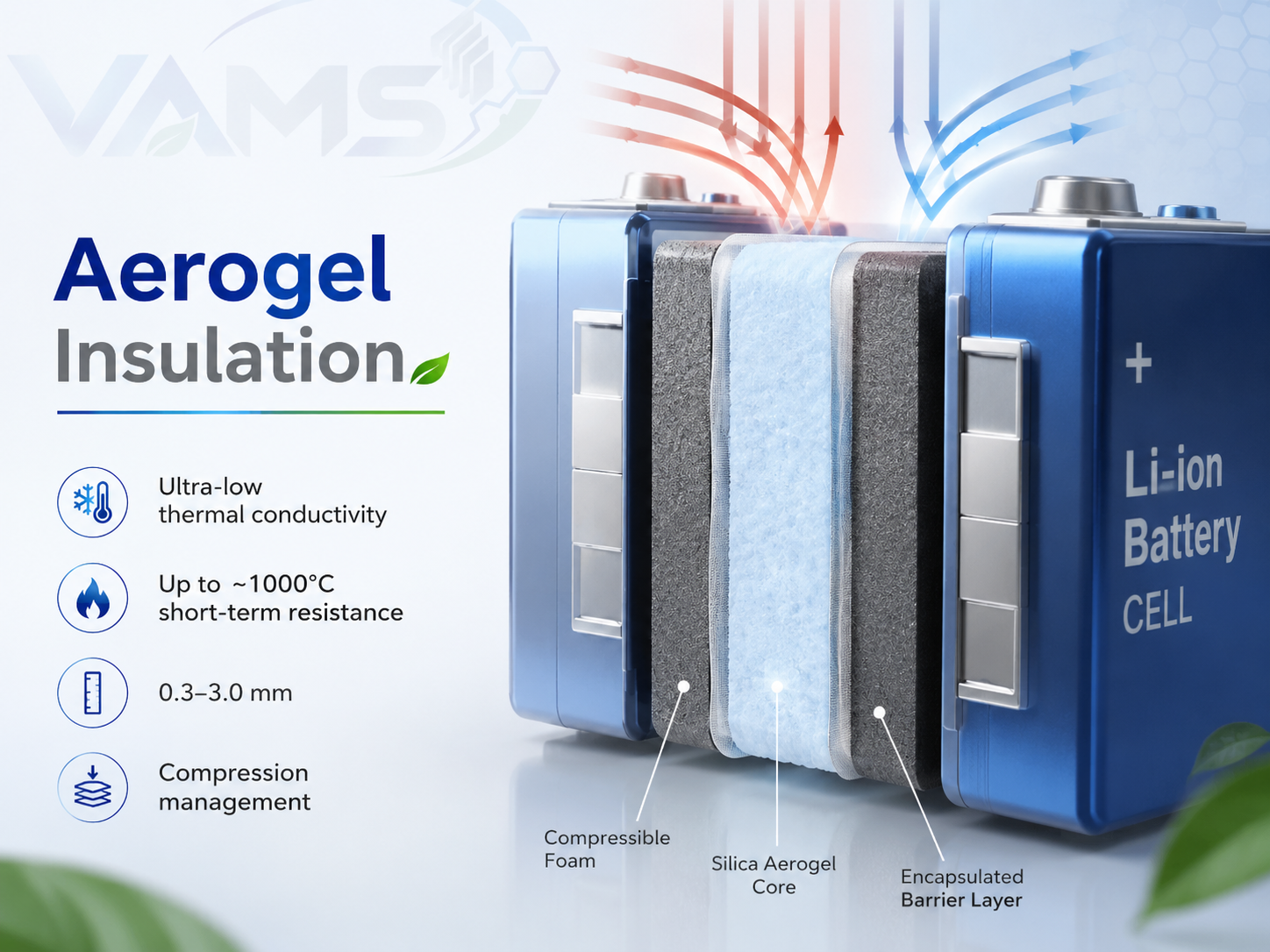
Silica aerogel — ultra-low conductivity thermal barrier, often combined with a compressible layer
Silica aerogel is among the lowest-conductivity solid insulations available. For batteries it is typically supplied as a thin pad or blanket, often combined with a compressible layer (e.g. encapsulated aerogel + foam) to also manage cell swelling.
| Property | Indicative Value |
|---|---|
| Thermal conductivity (RT) | ≈ 0.018–0.025 W/m·K |
| Hot-side resistance | Up to ~1000°C (short-term vent exposure) |
| Continuous service temp | −40 to +150°C (carrier dependent) |
| Thickness | 0.3–3.0 mm (pad/blanket) |
| Compression | Conformable; recovers to manage cell breathing |
| Dielectric | High (non-conductive); confirm under compression |
- Best-in-class thermal insulation per unit thickness — saves space vs. mica/foam alone
- Hydrophobic grades resist moisture pickup
- Often paired with a compressible pad for combined insulation + swelling management
Flame-Retardant PC Sheet
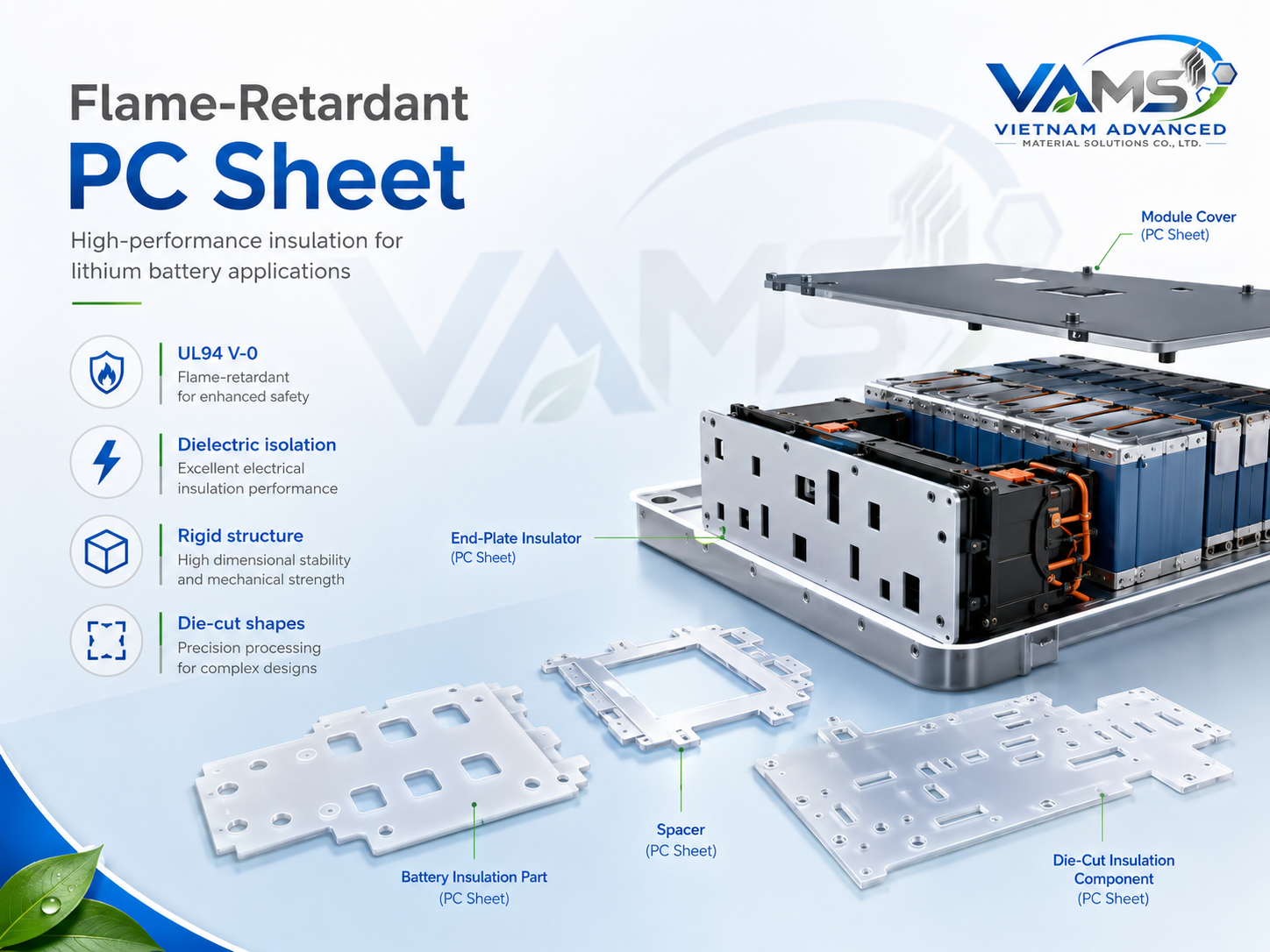
Flame-retardant PC sheet — rigid, dielectric, UL 94 V-0 spacer / barrier / cover
Flame-retardant polycarbonate (PC) sheet is a rigid, dielectric, UL 94 V-0 barrier used as a cell spacer, end-plate insulator, or module cover. It provides mechanical structure and electrical isolation, and resists ignition — complementing aerogel where rigidity and dielectric strength are the priority.
| Property | Indicative Value |
|---|---|
| Flammability class | UL 94 V-0 (FR grade) |
| Dielectric strength | 15–30 kV/mm (grade/thickness dependent) |
| Continuous service temp | −40 to +120°C (typical FR PC) |
| Thickness | 0.2–2.0 mm sheet (die-cut) |
| Mechanical | Rigid, high impact strength, dimensionally stable |
| Processing | Die-cut, CNC, thermoform to part shape |
PC sheet is a structural/dielectric barrier; it is not a thermal insulator on its own. For propagation delay it is combined with aerogel or intumescent layers.
Selection & Comparison
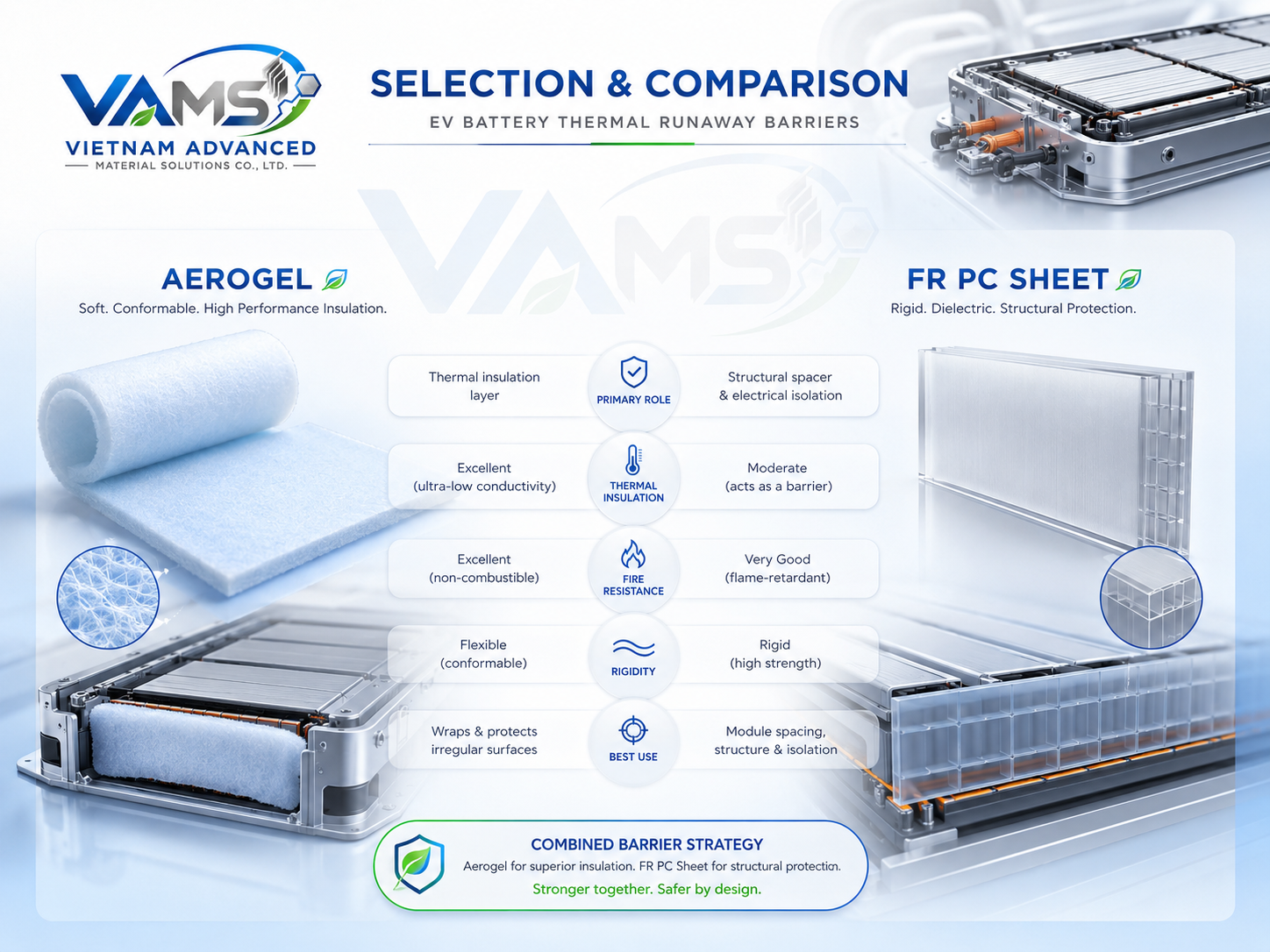
Selecting and combining aerogel and PC sheet by thermal, fire, dielectric and mechanical needs
| Criterion | Aerogel | FR PC Sheet |
|---|---|---|
| Primary role | Thermal insulation barrier | Dielectric / structural spacer |
| Thermal conductivity | Very low (≈0.02 W/m·K) | Moderate (not an insulator) |
| Fire resistance | Excellent (to ~1000°C) | Good (UL 94 V-0, but melts at high T) |
| Rigidity | Soft / conformable | Rigid |
| Swelling absorption | Good (with foam layer) | Low |
| Best use | Cell-to-cell thermal barrier | Spacer, end-plate, cover, isolation |
Many packs use both: an aerogel pad for thermal/fire propagation delay between cells, plus FR PC sheet for dielectric isolation and mechanical structure. VAMS can supply both, die-cut to part geometry.
Aerogel is primarily used for thermal insulation and fire-propagation delay, while FR PC sheet provides dielectric isolation and mechanical spacing. For battery pack safety, both materials should be validated at module or system level.
Placement & Process
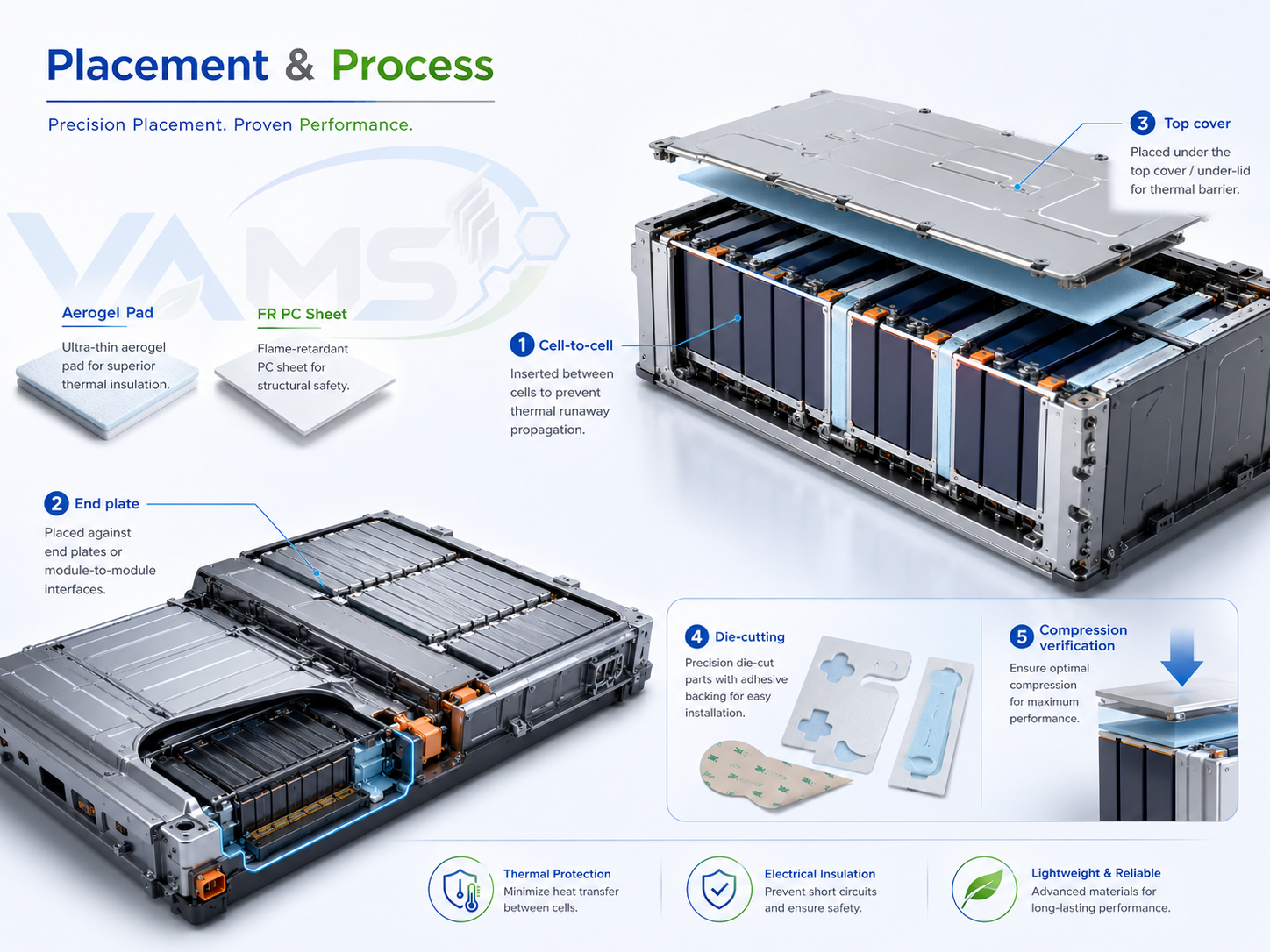
Placement across cell-to-cell, module, end-plate and cover — supplied die-cut to part geometry
- Cell-to-cell: aerogel pad (often with compressible layer) between prismatic/pouch cells
- Module-to-module / end plates: aerogel + PC sheet for thermal + dielectric isolation
- Top cover / under-lid: barrier against vent-gas flame path
- Die-cutting: both materials supplied as die-cut parts with tolerance control and optional adhesive backing
- Compression: verify barrier performance and dielectric at the pack’s working compression and over cell life
Why VAMS

Aerogel and PC sheet barriers, die-cutting support and combined thermal + dielectric strategies
- Aerogel pads/blankets and flame-retardant PC sheet for cell-to-cell and module barriers
- Die-cutting and nesting support — part geometry, tolerance, adhesive backing, scrap optimization
- Material selection by cell format, propagation target (UL 9540A / GB 38031) and compression
- Combined thermal + dielectric barrier strategies from one supplier
- TDS/SDS and project documentation support for PPAP or customer approval; local sampling coordination across Vietnam & Southeast Asia
Battery System Material Solutions
Material Solutions for ESS/BESS
Thermal Gap Filler for EV Battery Packs
Need help designing thermal runaway barriers?
Tell us your cell layout, barrier space, temperature and safety targets. VAMS can help recommend suitable aerogel, PC sheet and barrier materials for your battery pack.