
Specialty Materials for Electric Motor Manufacturing and Reliability
Impregnation, potting, bearing retention and thermal control for EV traction motors
Values are typical reference ranges and may vary depending on resin chemistry, motor design, substrate condition, curing process and OEM validation method.
Electric motors are the heart of every EV, e-scooter, and industrial drive system. The materials inside them — impregnation resins, potting compounds, bearing adhesives, and thermal interfaces — determine whether a motor achieves its rated thermal class, supports long-term thermal cycling reliability, and stays sealed against coolant and moisture.
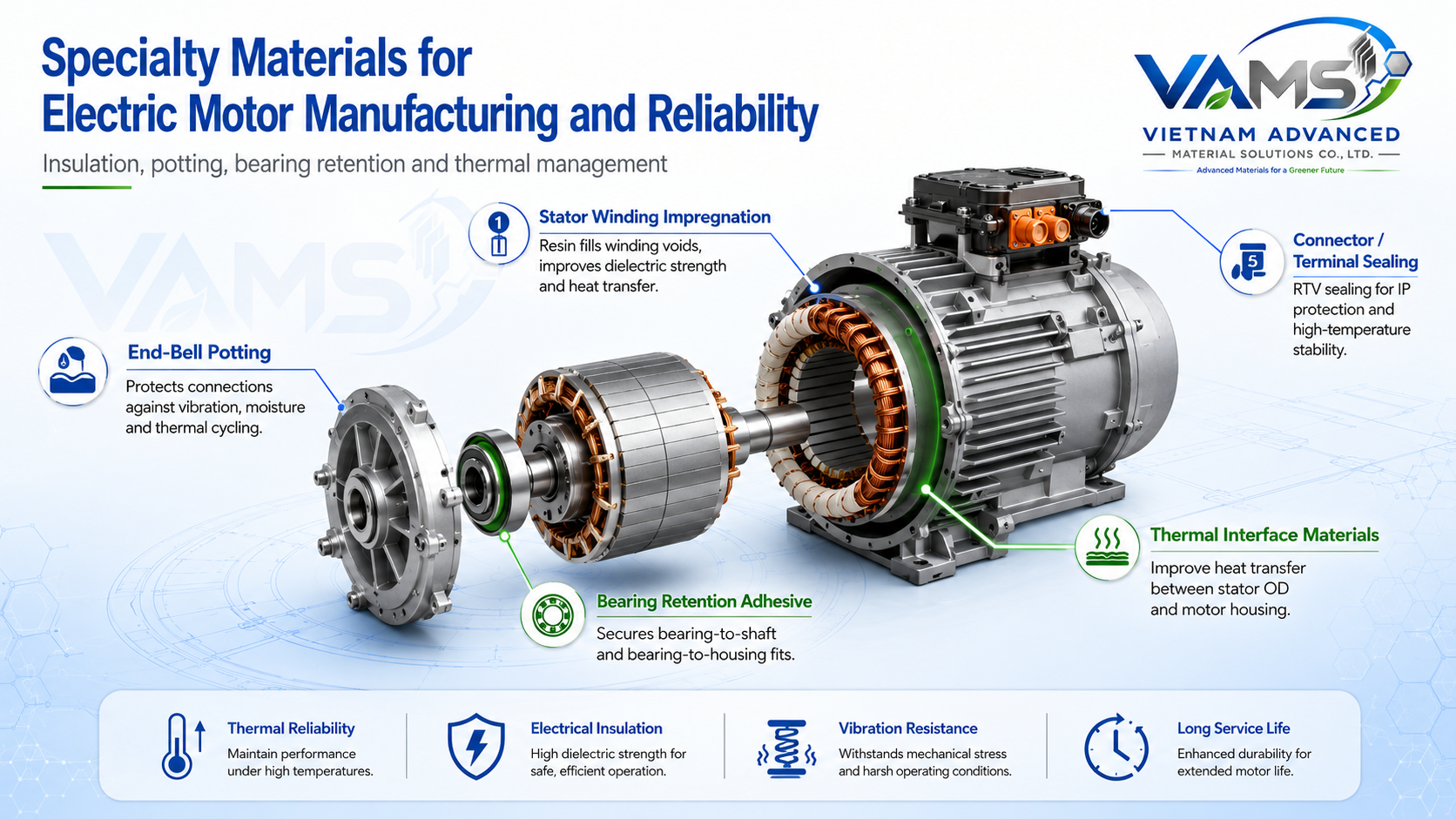
VAMS supplies the full material set for electric motors — impregnation resins, end-bell potting, bearing retention adhesives, and thermal interface materials
Electric Motors Run Hot — Materials Determine How Long They Last
The electric motor in an EV operates in one of the harshest environments in the vehicle. Peak torque demands push windings to temperature spikes above 150°C. Rapid thermal cycling, high-frequency vibration, and exposure to coolant fluids create conditions that destroy conventional materials in months.
VAMS supplies impregnation resins, winding encapsulants, bearing adhesives, and thermal interface materials for electric motor manufacturing and service.
Stator Winding Impregnation Resins
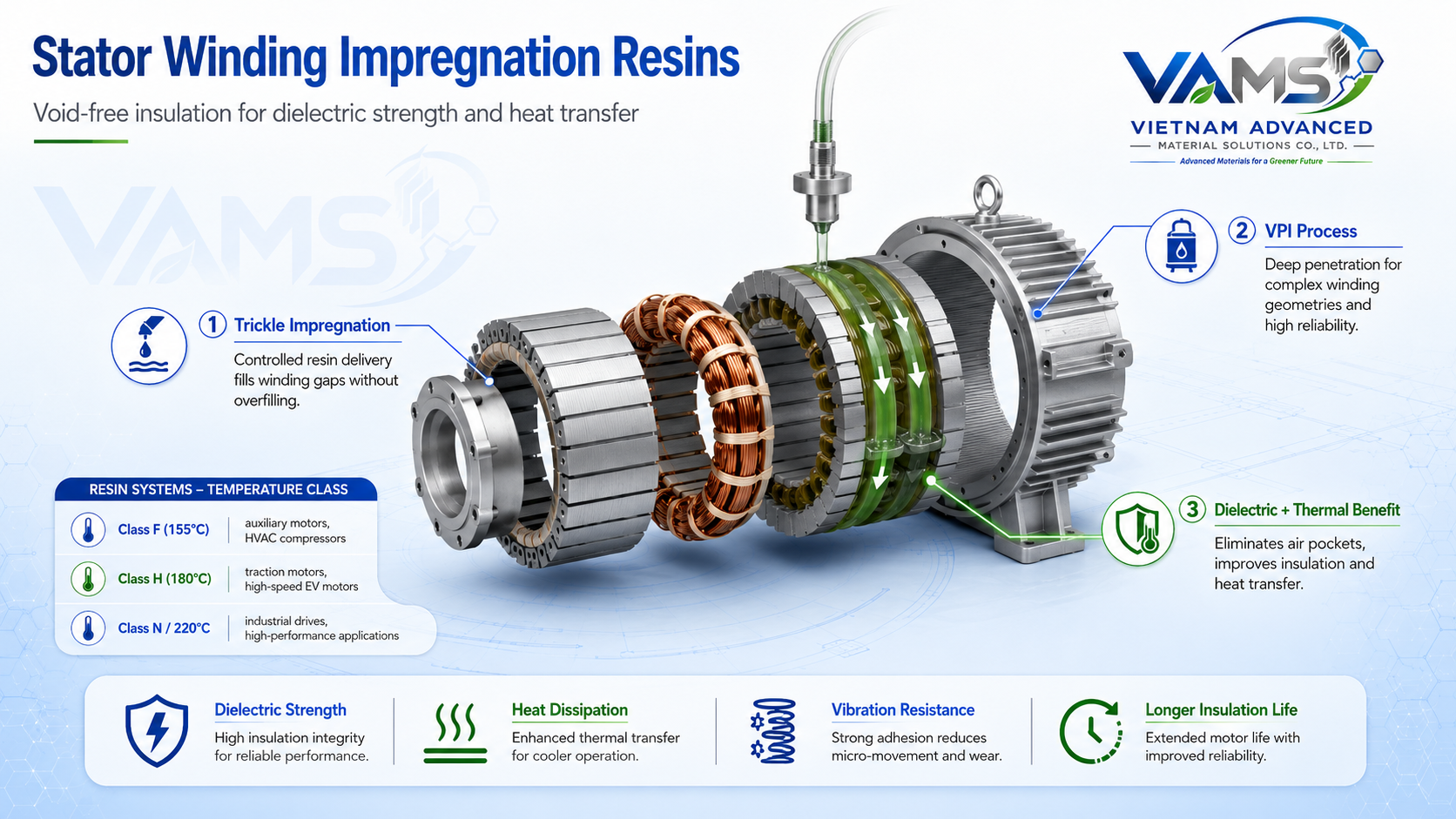
Trickle and VPI impregnation fill all voids in the winding stack — eliminating air pockets that reduce heat transfer and cause corona discharge
Stator impregnation fills the air gaps in a wound stator with resin, eliminating air pockets that reduce heat transfer and allow corona discharge at high voltages. VAMS supplies solventless epoxy and polyester impregnation resins from Class F (155°C) to Class H (180°C) and beyond, validated for both trickle and VPI processes.
Class F (155°C): Standard EV auxiliary motors, HVAC compressors
Class H (180°C): Traction motors in passenger EVs, high-speed motors
Class N / 220°C: Industrial drives, high-performance racing applications
Motor End-Bell Potting
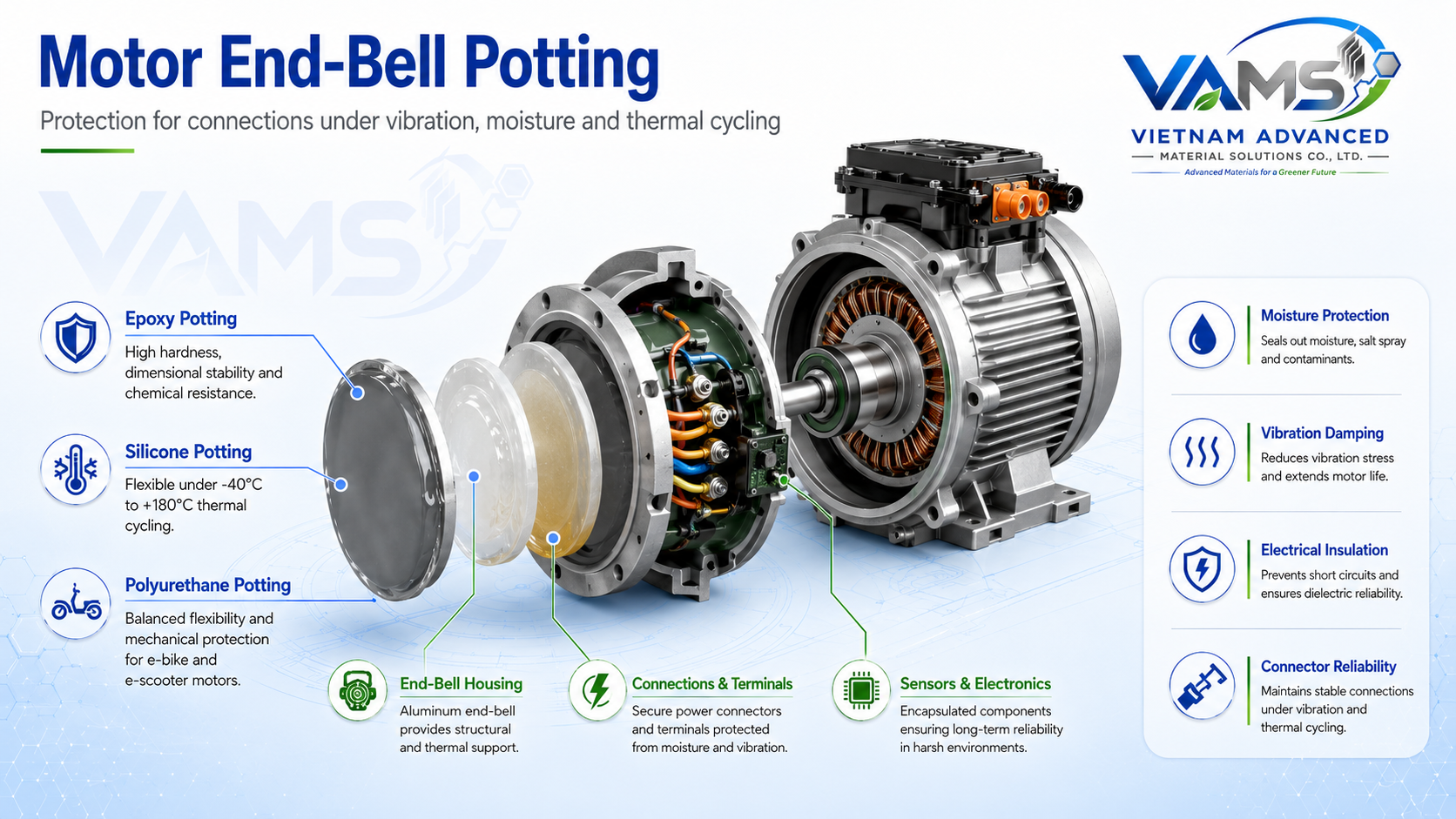
Epoxy, silicone, and polyurethane end-bell potting — matched to the motor’s thermal cycling and flexibility requirements
Epoxy End-Bell Potting
High-hardness epoxy for applications where the end bell is in a protected environment. Excellent chemical resistance and dimensional stability.
Silicone End-Bell Potting
Flexible silicone for traction motors where thermal cycling from –40°C to +180°C creates significant differential thermal expansion stress.
Polyurethane End-Bell Potting
A mid-ground option for motors that need flexibility but also good mechanical protection — common in e-bike and e-scooter hub motors.
Bearing Retention Adhesives
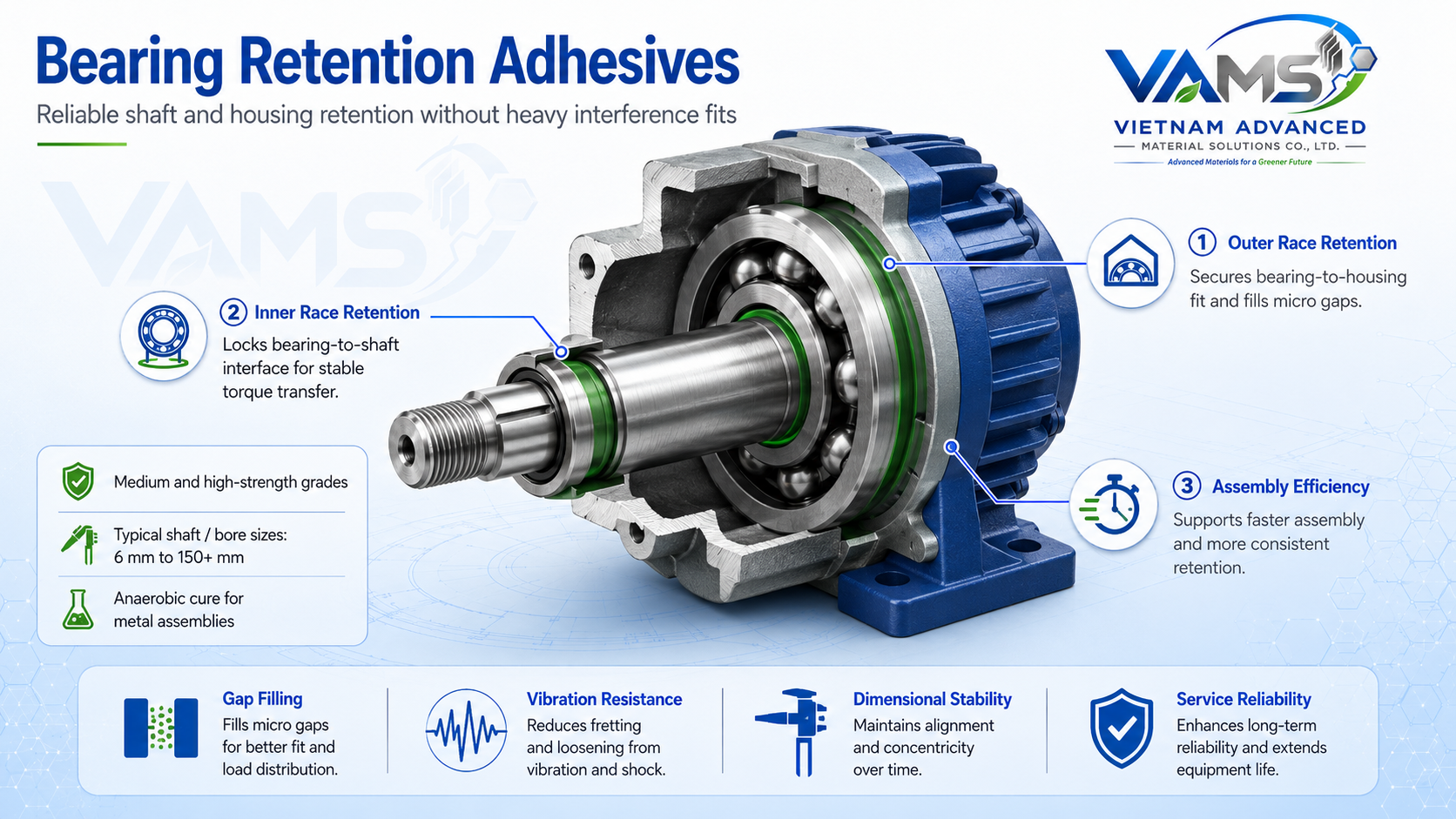
Anaerobic retaining compounds lock the bearing race in place — enabling faster assembly and more consistent retention than interference fit alone
Anaerobic bearing retention adhesives lock the bearing in place without the dimensional accuracy required for a tight interference fit, enabling faster assembly and more consistent retention. VAMS supplies medium and high-strength retaining compounds for shaft and bore diameters from 6 mm to 150+ mm.
E-motor Materials Selection Guide
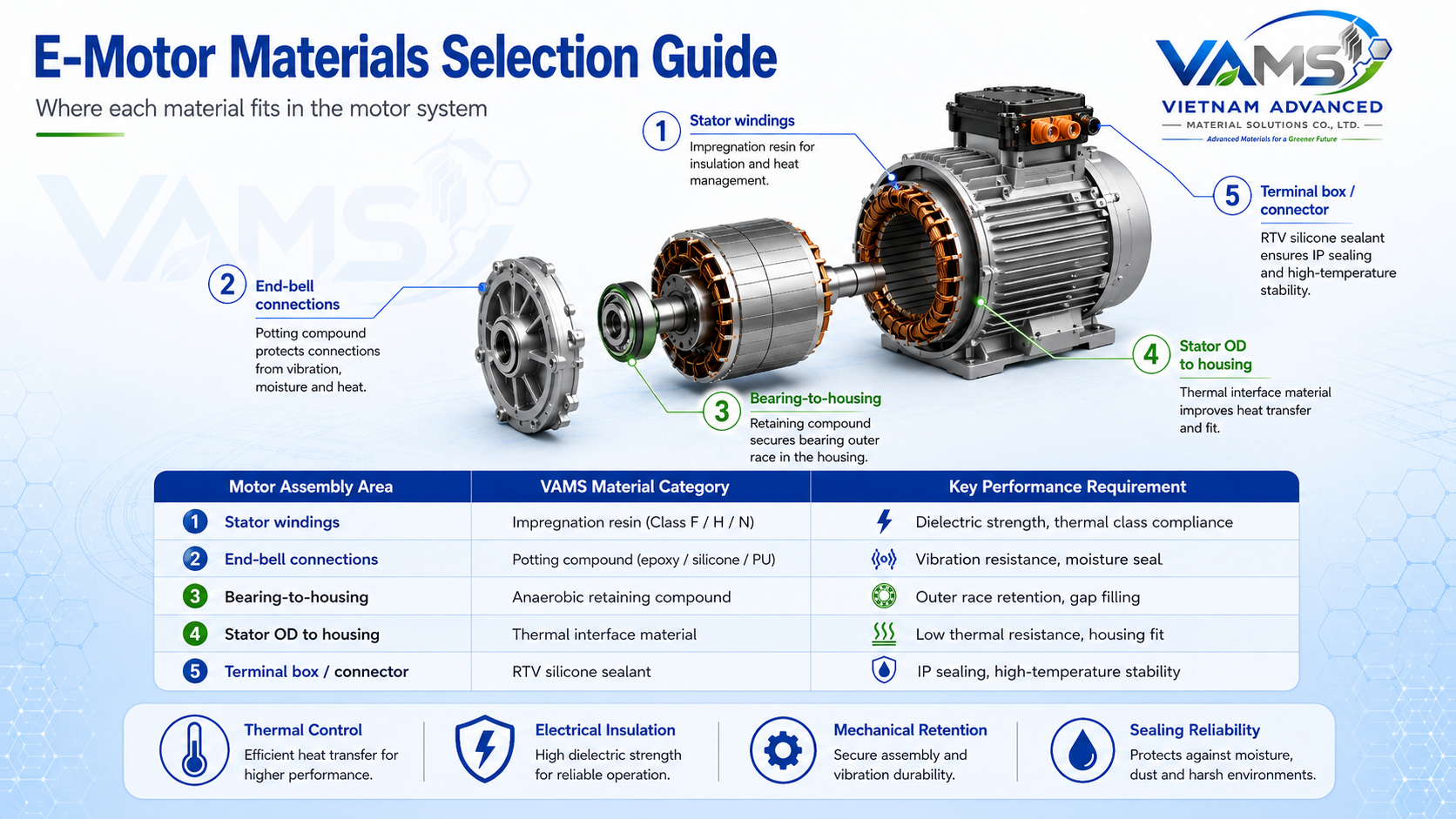
VAMS material recommendations mapped to each motor assembly area and its key performance requirement
| Motor Assembly Area | VAMS Material Category | Key Performance Requirement |
|---|---|---|
| Stator windings | Impregnation resin (Class F/H/N) | Dielectric strength, thermal class compliance |
| End-bell connections | Potting compound (epoxy/silicone/PU) | Vibration resistance, moisture seal |
| Bearing-to-housing | Anaerobic retaining compound | Outer race retention, gap filling |
| Stator OD to housing | Thermal interface material | Low thermal resistance, housing fit |
| Terminal box / connector | RTV silicone sealant | IP sealing, high-temperature stability |
Why Motor Manufacturers Work With VAMS
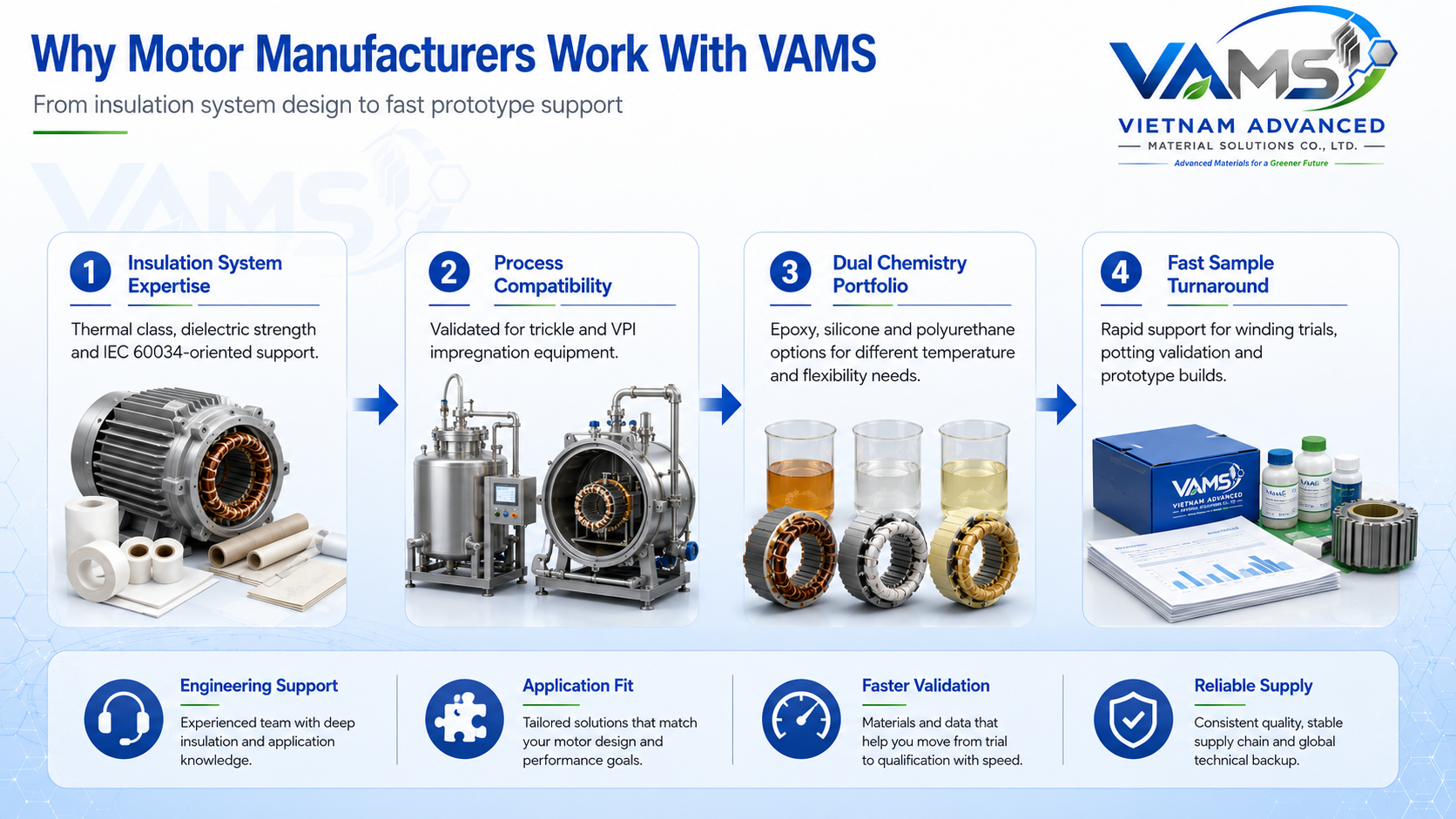
Insulation system expertise, process compatibility, and fast sampling — why motor manufacturers partner with VAMS
- Deep expertise in insulation system design — thermal class, dielectric strength, IEC 60034 compliance
- Process compatibility: resins validated for trickle and VPI impregnation equipment
- Dual chemistry portfolio: epoxy, silicone, and polyurethane for every temperature and flexibility requirement
- Fast sample turnaround for prototype winding and end-bell potting trials
Potting Compounds Guide
Thermal Interface Materials (TIM)
PCB & Power Electronics Material Solutions
Need help selecting e-motor materials?
Tell us your insulation class, process, power rating and reliability targets. VAMS can help recommend suitable impregnation resins, potting compounds, bearing adhesives and thermal materials for your motors.